Gasoline Engine Compression Tester Kit with Carry Case
Gasoline Engine Compression Tester Kit with Carry Case


No se pudo cargar la disponibilidad de retiro
-
Ordered
- - -
Order Ready
- - -
Delivered

Gasoline Engine Compression Tester Kit with Carry Case
GARAGE ESSENTIALS
Start with a reading. Plan the next repair.
When an engine feels down on power, a compression check gives you another piece of the picture. Compare cylinders and use the vehicle’s service specifications to guide the next inspection.
A practical kit for gasoline engines
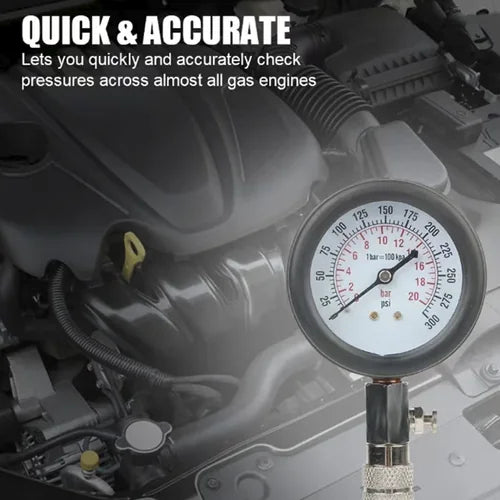
Readable analog gauge: view cylinder pressure directly.
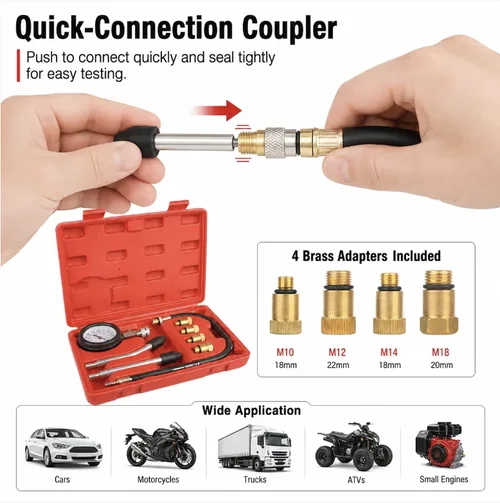
Flexible hose: route the gauge around accessible engine-bay components.
Four brass adapters: M10, M12, M14 and M18 fittings for compatible spark-plug ports.
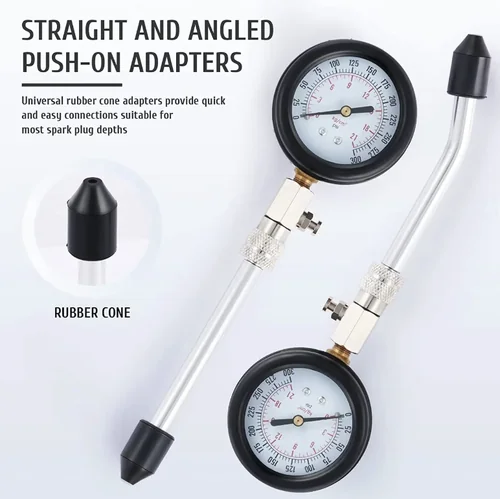
Two push-on probes: straight and angled rubber-cone options.
Quick connection: connect the hose or probe at the gauge coupler.
Fitted carrying case: keep the gauge, hose and fittings together.
From symptom to comparison
A low reading or a difference between cylinders can help determine where further investigation is needed. Compression readings alone do not identify a specific failed part; compare them with the manufacturer’s test method and limits.
Prepare. Connect. Read.
Identify the correct spark-plug thread and confirm adapter reach.
Prepare the vehicle and disable ignition and fuel delivery as directed by the service manual.
Fit the suitable adapter and connect the gauge securely.
Crank and record readings using the specified procedure. Release gauge pressure before disconnecting.
What’s in the case
Measurement |
Cylinder compression pressure |
|---|---|
Engine type |
Compatible gasoline engines |
Threaded adapters |
M10 / M12 / M14 / M18 |
Other components |
Analog gauge, flexible hose, straight probe, angled probe and carrying case |
Will it fit my engine?
Check thread diameter, pitch, reach and access before purchase. A matching thread diameter alone does not guarantee fit. Intended for gasoline compression testing; not a diesel compression tester or a leak-down tester.
Use the vehicle’s service procedure. Keep clear of moving components, hot surfaces and ignition sources, and wear suitable eye protection. Vehicles and workshop equipment in application images are not included.